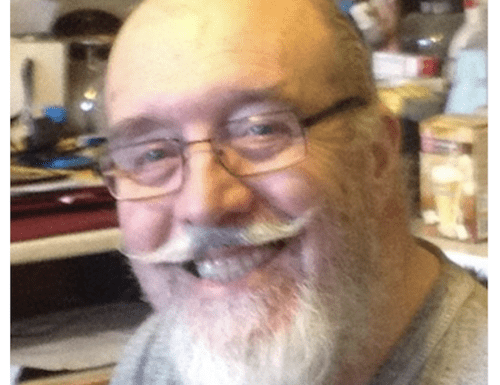
George has advice for someone newly diagnosed.
Hello everyone it’s George here from Shropshire. I thought I’d read from a blog I did the other day which a lot of people seemed to find helpful. About what the advice would be that I would give to someone going to get a formal diagnosis of dementia. So here we go:
Dementia is not the end of the time the end of your life – sorry start again –
Dementia is not the end of time our life, but it is bereavement. So it is never going to be easy to take the diagnosis. You are losing the future you assumed you would have.
Dementia at working age, whether or not you do paid work, affects your ability to carry on in the same ways you are used to. It doesn’t, however, mean you can no longer work and get paid for it. Nor does it mean you suddenly lose all that experience and skills and knowledge you have built up over your life. You are the same person after a diagnosis as you were the day before, or the year before. You’re just, you’re just – you’re not just a person with dementia. You are who you always have been.
You probably have been noticing, and possibly struggling with, the developing symptoms and effects of your brain disease that you have for months that you have or possibly years. You may have been finding your work increasingly stressful and difficult to keep up with.
So the confirmation that there is an underlying cause, ie brain disease, may be a comfort, as you now know the cause of your difficulties. See it as positive in that respect. Better to know the cause, and find ways of dealing with it, than to struggle and feel anxious and depressed not knowing.
No one wants to have dementia, but you are far from alone. You may feel terribly alone just now, but you are not, and you need to talk to others with the disease. Take heart and some comfort that you are one of 850,000 people in the UK who have this disease.
Ask your Memory Service to give you contact details of others living with young onset dementia and some time in the coming days and weeks call someone. Talk. Find out how they are getting on and how they deal with it.
Ask if you can meet an occupational therapist. They provide support and help you develop solutions to get round difficulties you may be having now, or will have later. Occupational therapists are wonderful and will help you you go on living as you choose and as you want tofor as long as possible.
Ask your consultant for the name of the person who will provide you with support after your diagnosis, and be someone to talk to when you need to. Everyone is meant to have a named person to support them.
Remember the brain disease that causes dementia can progress at widely differing speeds. Some people’s disease gets worse very slowly. You may well be one of these.
Dementia affects everyone differently. We have different symptoms, and different parts of the brain are affected, depending on where the disease is. There is no one pattern of effects. Yours will be your own. So don’t look at the stereotypes in pictures and newspapers and assume that will be you soon.
You have not suddenly, almost overnight, become a person who is unable to think, speak, feed yourself, or take active part in your community. Remember that.
Ask if you have Admiral Nurses in your area. If you do, get in touch with them. If not call their excellent helpline which is open seven days a week. Find the details online.
Contact the 3 Nations Dementia Working Group through their website and ask if they can put you in touch with someone you can talk to. Someone who has dementia who is a member of the organisation People do this. I do this.
Look on the DEEP website and see if there is a DEEP peer group in your area. DEEP stands for Dementia Empowerment and Engagement Project.
These groups are social groups, all run by people with dementia for people with dementia, at all ages and stages, and there are around 130 in the UK. Go along. Say hello. Talk to people about how you feel and ask their advice. Just listen if you want. You’ll find them welcoming and understanding.
A lot of people say it’s paid, to go to DEEP groups has made all the difference to their new life.
For the moment, I would suggest you avoid Dementia Cafes of the traditional sort run by the various charities. These are mostly attended by older people, further along on their journey, and it may be off putting or depressing if you’re at an early stage or younger.
But above all, don’t sit at home and feel miserable. Go out and do what you usually do. Do what you enjoy doing. And try not to be frightened about telling people. Most will try to understand. Being open about your disease is often a way of accepting it and getting on with life. Perhaps not ‘as usual’, but living nevertheless.
And do what you enjoy doing. What gives you pleasure?
Ignore people who tell you not to take risks. Medical and other care professionals will often suddenly treat you as if you have changed overnight into a person who can’t do things, and can’t make safe decisions.
Ignore them, please. Go on doing just what you choose to do. You might even want to start doing things you have never done before. Take Wendy Mitchell for example. She has done zip wires, parachute jumps and walked over burning coals since her diagnosis.
Read her book, ‘Somebody I Used to Know’. She was diagnosed in her late 50s. And really writes really, really well and helpfully. She writes really good blogs too.
Go to the Young Dementia UK website and use their resources and ideas.
Are you using social media? Twitter? or Facebook? You can find lots and lots of people to talk to and share experiences with via twitter. Look at and follow people who are listed as followers in other twitter people’s profiles. You’ll find a huge amount of information, where to look for things, just keep following and you’ll pick it up.
If you don’t have a tablet or ipad or equivalent, get one. Learn to use it. It will become your companion and your bridge to a lot of people, ideas and information and friendship.
After diagnosis we often start new lives, meet new friends, and do new things, have more fun, not less. Life can open up with a fresh honesty and openness. You may lose some friends and acquaintances, but if you go out there you will find lots more, who understand you and help you and encourage you.
So good luck to you. Life is just starting again. Life is for living, so go out and live.
Bye now.