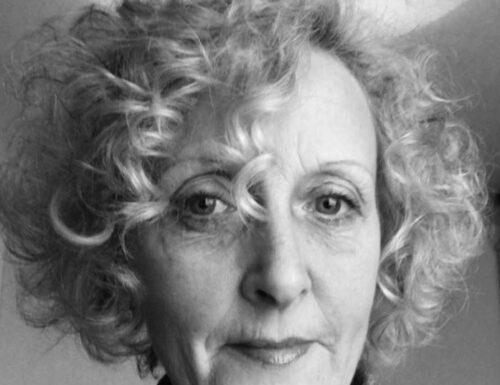
Christine makes this diary entry to mark International Women’s Day on Sunday
Hello, this is Chris, one of the dementia diarists.
I was thinking, it’s coming up to International Women’s Day this coming weekend, on Sunday. And I was trying to think, “What does it mean to me?” And I suppose it’s all about achievements in some ways, and I was thinking, “What have I achieved in my life?” Because I was never really a confident person. And I always wanted to be a PE teacher – that was my dream job. But when I was 16 I spent – I caught meningitis and I missed 6 months off school and I didn’t get the qualifications I needed to go college, and I felt devastated. So I started doing a year of sixth-form, A-levels and then I thought, “What’s the point when I haven’t got the O-levels?”
So I had to totally change my career path and didn’t know what to do and I just felt a failure. So first of all I did some dental nursing; and then I just worked in a store; and then I applied to be a police officer, not thinking I would get that job. Anyway, to cut a long story short, I served 30 years as a police officer and I actually retired after my 30 years’ service. But during my 30 years’ service, I always felt, “Well, I don’t know if I can achieve that, I don’t know if I can get that”. And it always turned out I was a good achiever, because I put my mind to it.
And after my retirement I carried on working and then, suddenly in – well between 2013 and 2015 I had three minor strokes, which left me with some cognitive issues. And then in 2016 I found out I have early-onset vascular dementia. Now, that was just a low bowler that blew me totally out of the water. And it left me feeling really depressed and really anxious and I became a prisoner in my own home for three months. And at that time I remember thinking, “You’ve got a choice here. You can either sit at home and watch daytime television and, you know, call it a day, and try and get your act in order. Or I can perhaps do something about this”.
And my lifeline that was thrown to me was – I had no follow-up after my diagnosis, so eventually I did ring the Alzheimer’s Society and I went on a course that they run called “Living Well with Dementia”. And that was the lifeline that was thrown to me. And as a result of going on that course I met other people living with dementia and I hadn’t met anyone with dementia before. And also, I started getting involved in giving talks for Alzheimer’s Society and I was given positive feedback that the talks that I gave were very good.
And now in 2020, I’m an ambassador for Alzheimer’s Society and I’m involved in the DEEP network – I love the DEEP network – and trying to set up groups locally for people with dementia. And the other thing I’m involved with is something called Zoomettes. Now, Zoomettes – we’re a group of women, all living with dementia, and we have a Zoom together call once a week. And we talk about all sorts of things. We share with each other, we use it as a bit of a peer support network.
But not only that, we think about things that need addressing for people living with dementia, things that are totally wrong. Like social prescribing and why, if you’re living with dementia, do you have to pay for your own care, when if you’re unfortunate to have, I don’t know, cancer or heart problem, there’s a medical pathway in place?
And I just think, d’you know what, I think I’ve been an achiever now and 3 years ago I would never have thought that I’d be able to go and give talks and be able to encourage people and just raise awareness around dementia. So all the times I’ve had knock-backs, I think I’ve just, you know, got past them and been able to carry on achieving.
I lost my job when I had my diagnosis of dementia, and there were no reasonable adjustments made for me. So within 3 months of getting the diagnosis I also lost my job. But now I just think I can help others by giving talks and Zoom calls and all sorts of things. I’m also a member of the 3 Nations Dementia Working Group – not a member, I’m on the – not the committee [laughs]. Oh, anyway I’m a part of that as well.
So there’s still lots of things that we can all do. And as a woman I feel that I’ve achieved a lot even in the face of adversity, thinking that wouldn’t, sort of, get anywhere after my diagnosis of dementia. But just stop and think about the things that you’ve managed to achieve as women – and men . But, you know, when I was a police officer we were under-represented as women, so it was a case of just feeling a bit insecure, a bit isolated, but I manged to do 30 years in that job and now I’m still going.
So I just want to give some encouragement really, to – especially to women, because women tend to be the caregivers and we don’t like asking for care ourselves. But, you know, we can all do something. It’s just a case of looking to see what you can do. So be an achiever coming up to International Women’s Day and think of the things that you’ve achieved. Thank you.