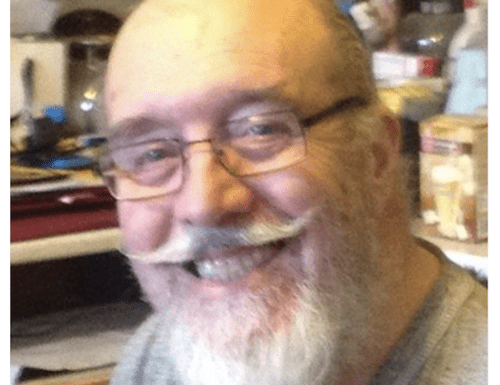
Chris shares her story of diagnosis and finding her life again
Hello, it’s Chris Maddocks. I’ve just been thinking about a few things that I have issues with. One, was a real struggle to get a diagnosis of dementia in the first instance, and secondly, when I had that diagnosis, it wasn’t followed up or anything. And today I’m doing lots of things: I give talks and attend meetings and I just wanted to explain briefly how I managed to get from feeling hopeless to feeling hopeful, and feeling useless to feeling useful.
So I’d had some cognitive problems following a stroke, but when I was 60 I knew that there was just something wrong with my head. Went to my GP and told her this and she replied that she was there for my physical health and not my mental health. I left the surgery in tears and I didn’t know what to do. A few months later I had – I couldn’t use my hands properly, and I ended up in the hospital and I was referred there to the elderly care assessment unit – not a very nice thought when you’re 60 years of age.
Anyway, when I went there I went on my own, thinking it was just an assessment, and once there I had my diagnosis of early-onset vascular dementia. I can remember that as soon as the doctor said the word ‘dementia’, I didn’t remember anything else that he said, although in a letter he said that he’d explained everything to me. I left there and felt as though I’d just been given a death sentence. And I went home and I became a bit of a recluse and I couldn’t speak to people without bursting into tears.
And then after a few months I plucked up the courage, because I wasn’t referred onto any services, I plucked up the courage and I rang Alzheimer’s Society and that same day people came round to see me and I went on a course called ‘Live Well With Dementia’ and that was a real lifesaver, that was. And gradually my confidence started to come back and I was very gently eased into doing a few things with Alzheimer’s Society. And then I moved locations and I carried on doing talks for Alzheimer’s Society and now I’ve done lots of talks and I’ve recently been made an ambassador for Alzheimer’s Society and also I’ve become involved in the DEEP network, and DEEP stands for Dementia Empowerment and Engagement Project. And there are some really powerful people who belong to DEEP and all we want to do is try to help other people who may have just received a diagnosis of dementia.
And I just wanted to say that you can still live your life relatively well, especially when you’re early diagnosed, so don’t just put yourself on the rubbish pile and think, ‘that’s me, I’m done for; I can’t do anything’. Gradually you’ll be able to do things, so think about what you can do, what you’d like to do, and get involved in trying to help other people. My main thought is, if I can help one person to not have to go through some of the experiences that I went through, then it’s worthwhile.
So please, if you’ve just had a newly diagnosed diagnosis of dementia, things will improve, things will get better. And seek help from – you know, whatever organisation is out there that you feel you can approach and get help from. And there’s DEEP networks all over the country and this is peer support and these groups are run by people with dementia for people with dementia.
So please go and get some help and have a look to see what’s available and help yourself. So I hope this has been a little bit useful for you folks. And two years post-diagnosis, I’m in such a different place and I can now see that I can still do things. I’m not working, but I do some voluntary work and I do – I give talks, as I said, so…yes, keep your chin up, as my mum would say, and have a look to see what’s available for you. Thanks!